
Services
Patios & paving across Surrey, Hampshire & South West London
A patio is usually the part of the garden you use most, so it has to work hard: level and well drained, set at the right height against the house, and finished so the edges, steps and joints still look sharp years later.
We lay new patios and replace tired ones, from compact courtyard terraces to large wrap-around spaces with steps down to the lawn, and we can suggest options that suit the house and the way you use the garden.
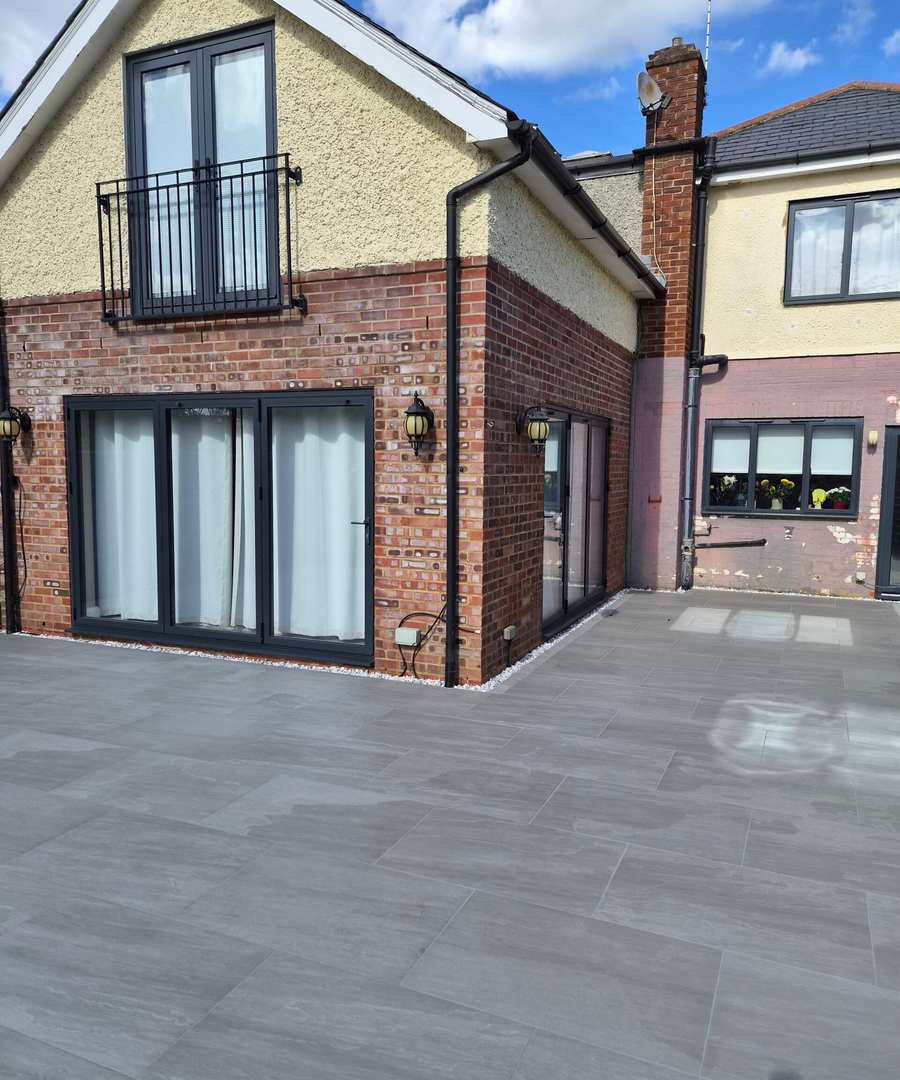
What we do
Our patios & paving work
- New patios outside back doors, bi-folds and garden rooms
- Replacing tired or uneven paving
- Curved patios and raised terraces on brick plinths, with steps down to the lawn
- Paths around the house and stepping stones set in gravel
- Large-format slabs and traditional multi-toned paving
- Patios combined with sleeper raised beds, new fencing and fresh turf
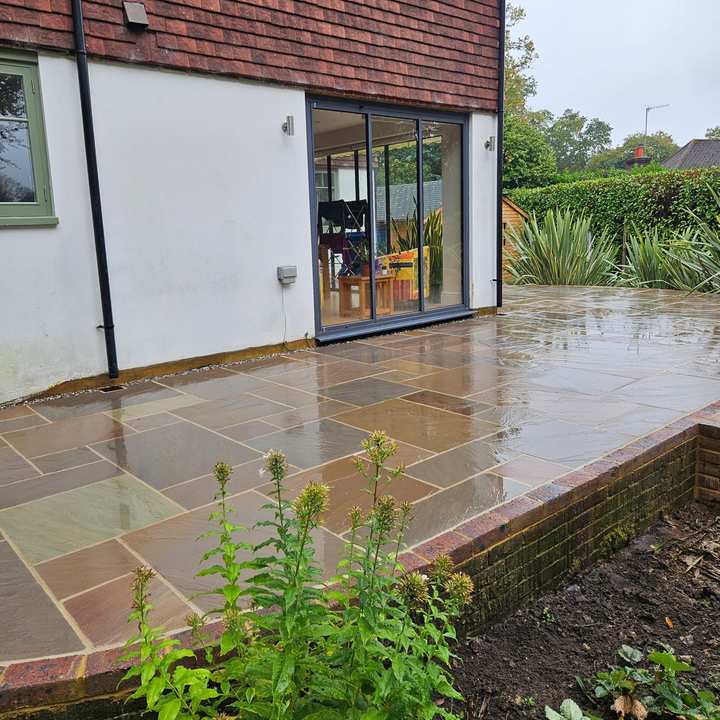
Curved patio on a brick plinth 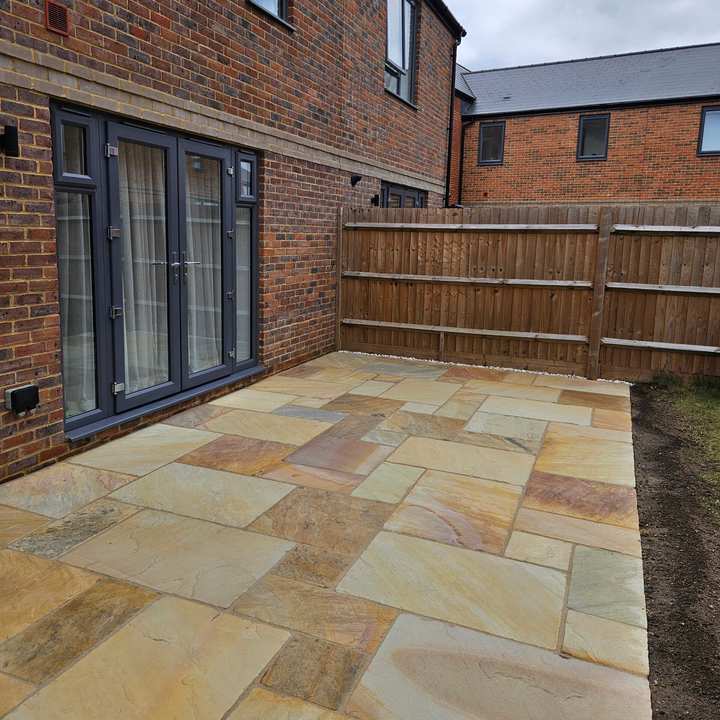
Patio and new boundary fencing 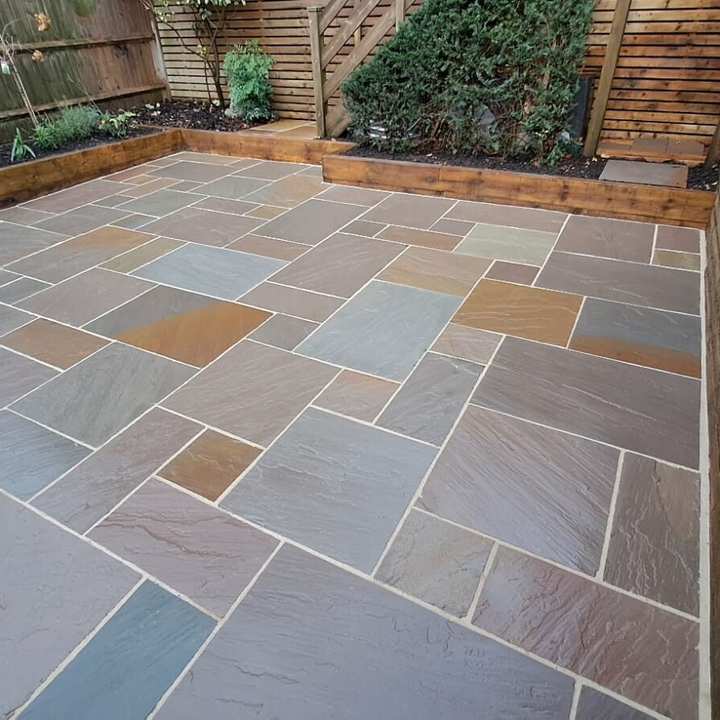
Patio with sleeper raised beds 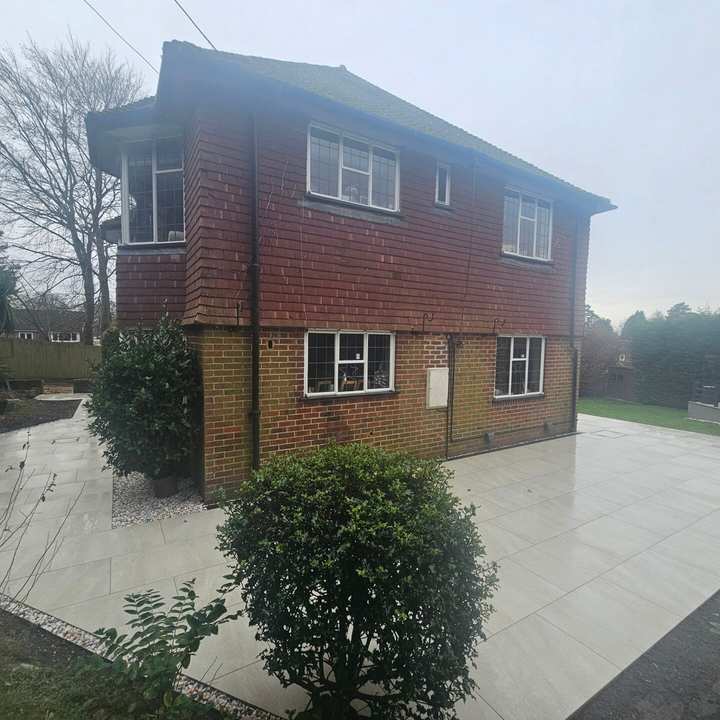
Paving wrapping around the house 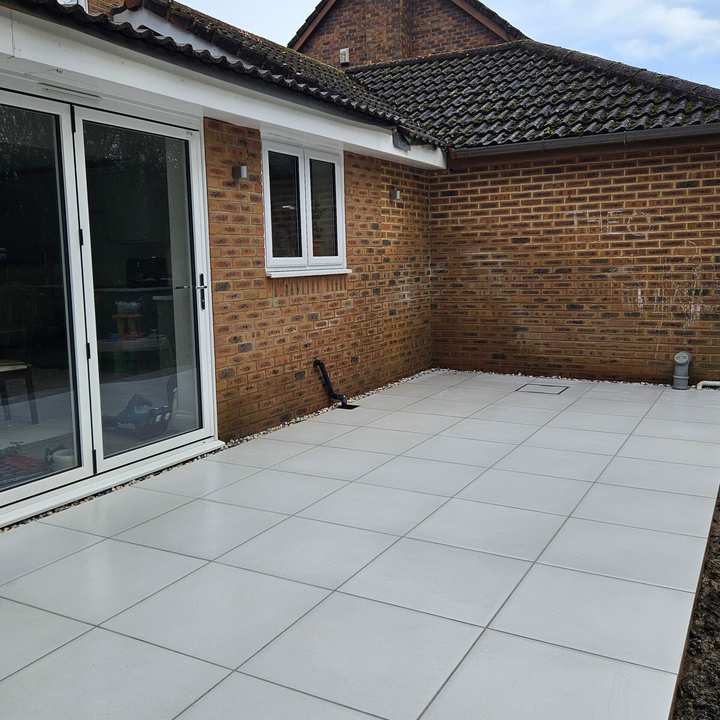
Courtyard patio outside bi-fold doors 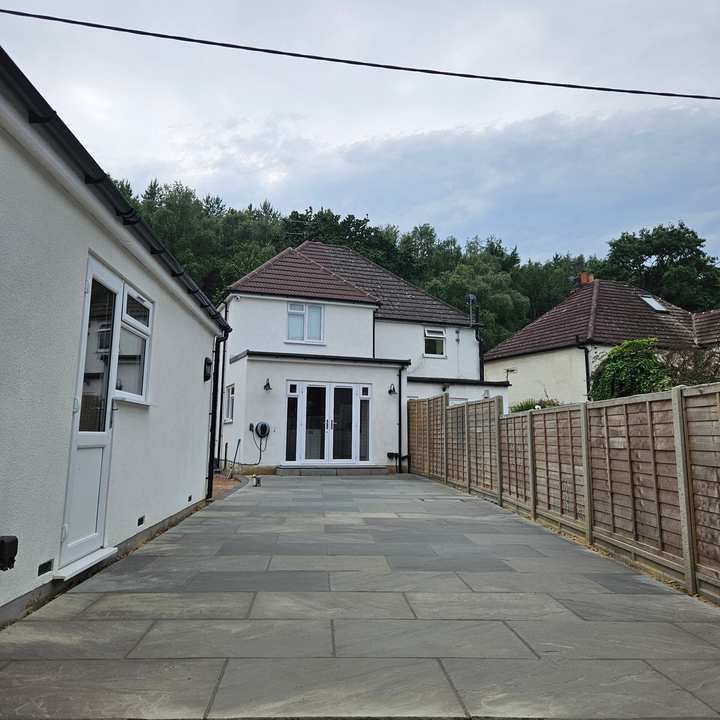
Long paved terrace and new fencing 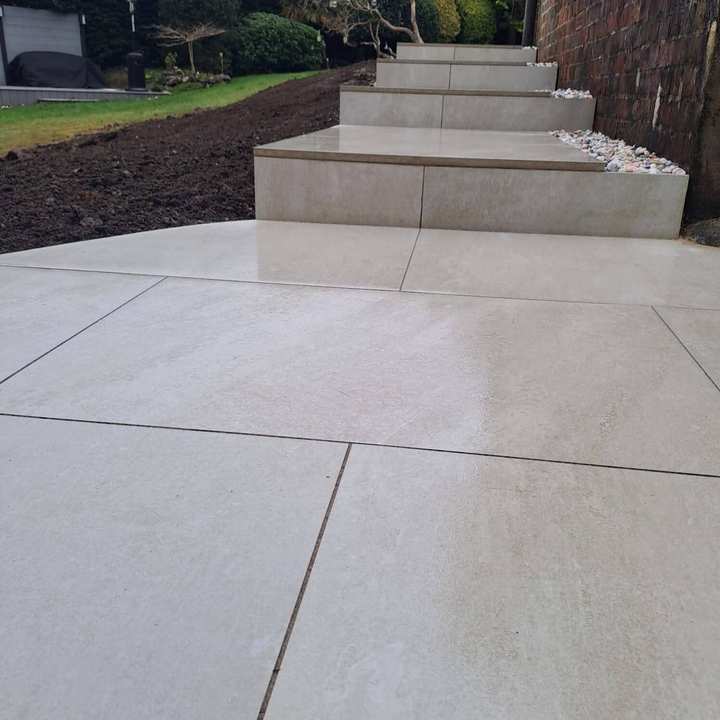
Paving with stepped levels 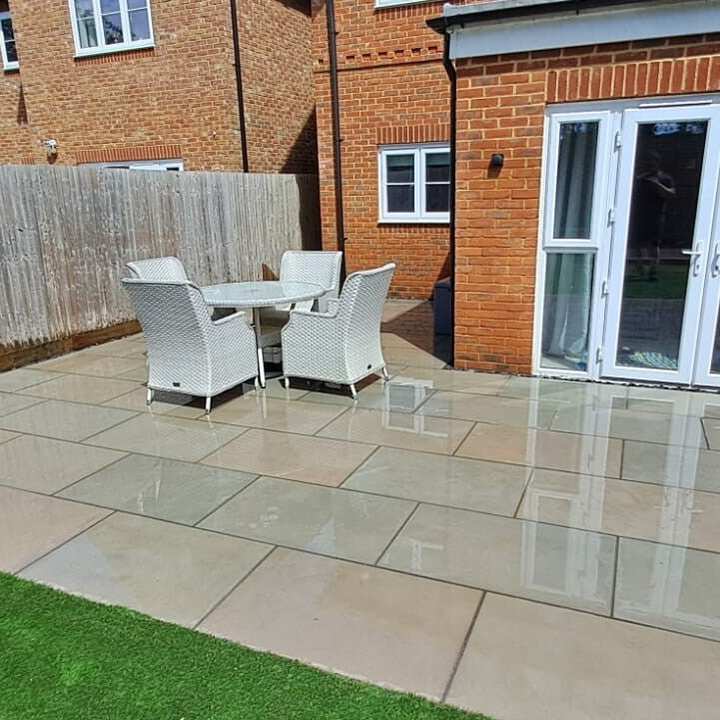
Patio outside French doors 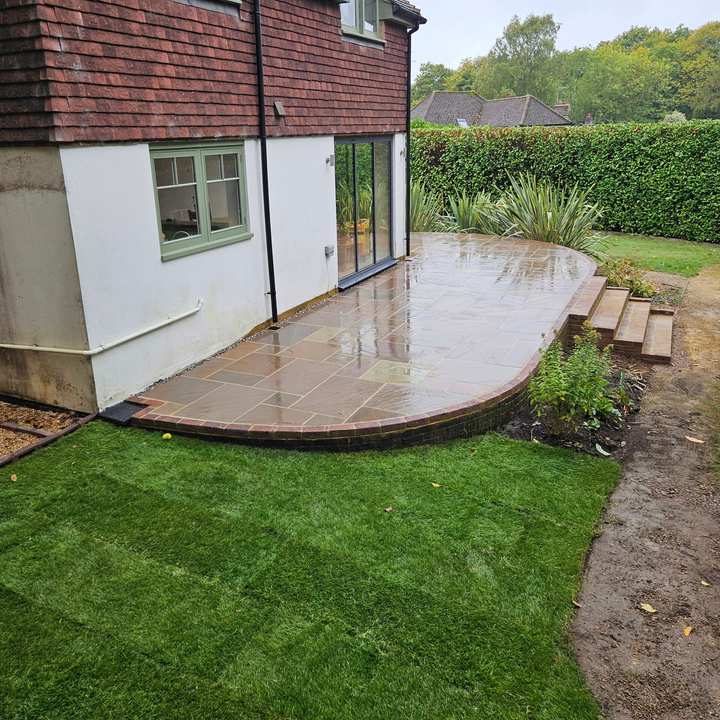
Curved patio with steps to the lawn
Thinking about patios & paving?Tell us a little about your space and what you have in mind, or give Dan or Adam a call.
Planning advice
Planning a new patio: what to consider
- Size and position
- Mark the outline on the ground with your furniture in place before deciding the size, and leave room to walk around the table. Think about sun, shade and privacy at the times you are most likely to sit out.
- Level against the house
- Paving next to a house should normally finish at least 150 millimetres below the damp-proof course, so rain cannot splash above it and moisture cannot bridge into the walls.
- Falls and drainage
- A patio needs a gentle fall, typically around 1 in 60 to 1 in 80, so water runs off towards a lawn, border or drain rather than pooling or running back towards the house.
- What is underneath
- A patio is only as good as its foundations. Ground preparation and a well-compacted sub-base matter as much as the slabs for a patio that stays level for years.
- Porcelain or natural stone
- Porcelain is dense, consistent in colour and easy to keep clean. Natural stone such as sandstone varies in colour and texture and weathers over time. Each needs a laying method suited to the material.
- Drains and inspection covers
- Inspection chambers must stay accessible. Recessed covers can be filled with matching paving so they blend in while still lifting out when needed.
FAQs
Patios & paving: common questions
Do I need planning permission for a patio?
A patio in a back garden does not usually need planning permission. In a front garden, new hard surfacing over 5 square metres needs permission unless it is permeable or drains onto a lawn or border within the property. Listed buildings and conservation areas have extra controls.
Porcelain or natural stone, which is better?
Neither is better for every garden. Porcelain suits a crisp, modern look and is easy to clean. Natural stone has more character and softens as it weathers. The house, the style of the garden and how much upkeep you want usually decide it.
Can new paving be laid over an old patio?
Sometimes, but it is often not advisable. Laying on top raises the level, which can bring the surface too close to the damp-proof course and change how water drains. The existing base also has to be sound.
How do I look after a new patio?
Sweep regularly and wash with water and a soft brush. Follow the care guidance for your paving material, as some cleaning products can mark natural stone.

Start your project
Tell us about your outdoor space
Call Dan or Adam for a chat about what you have in mind, or send us a few details and we’ll get back to you.