
Services
Garden fencing across Surrey, Hampshire & South West London
Good fencing does several jobs at once: it marks the boundary, gives the garden privacy and shelter, and frames everything else you have done to the space. It also has to stand up to wind and weather for years, so posts, footings and the gap between timber and soil matter as much as the style you choose.
We fit new fencing, replace old runs and carry out fence repairs, often as part of a wider project with a new patio, lawn or driveway.
What we do
Our fencing work
- New garden fencing, from single runs to whole boundaries
- Replacing old fencing as part of a garden makeover
- Fence repairs
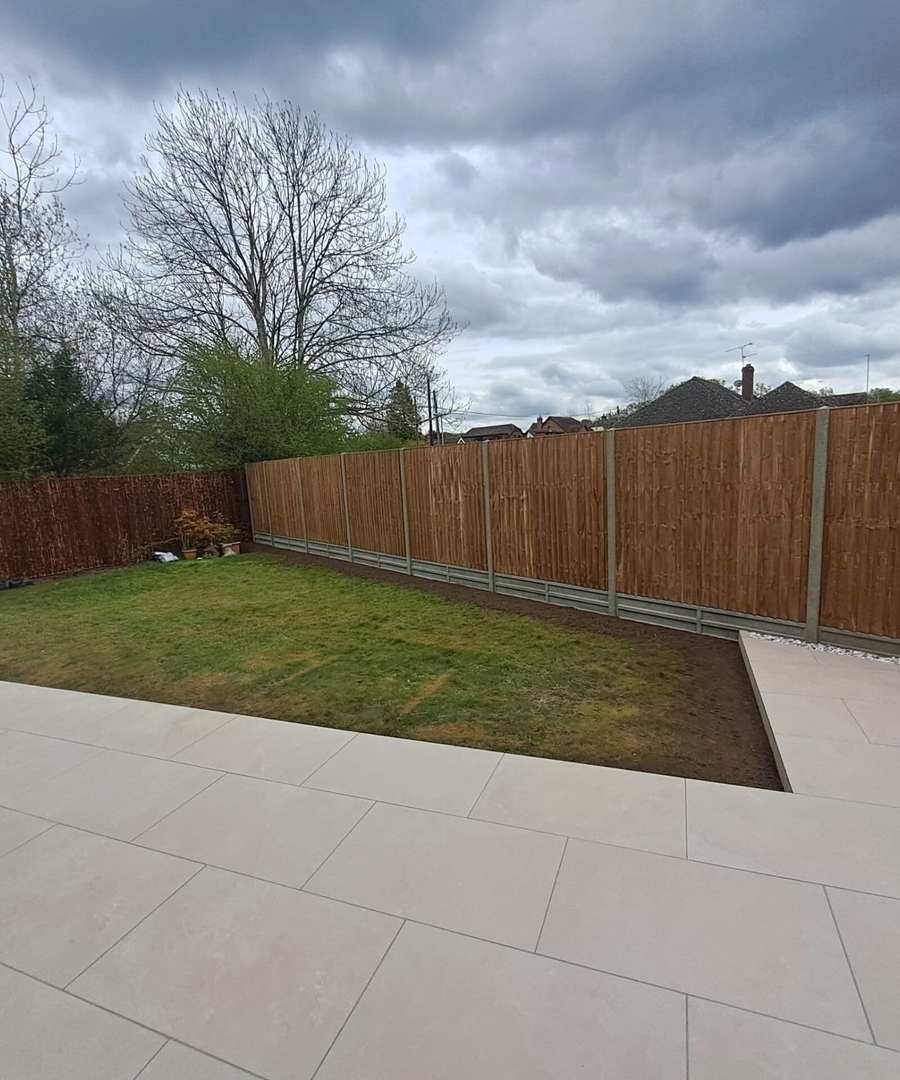
- Vertical-board fencing on concrete posts with gravel boards
- Horizontal-board fencing for a more contemporary look
- Fencing fitted alongside new patios, lawns and driveways
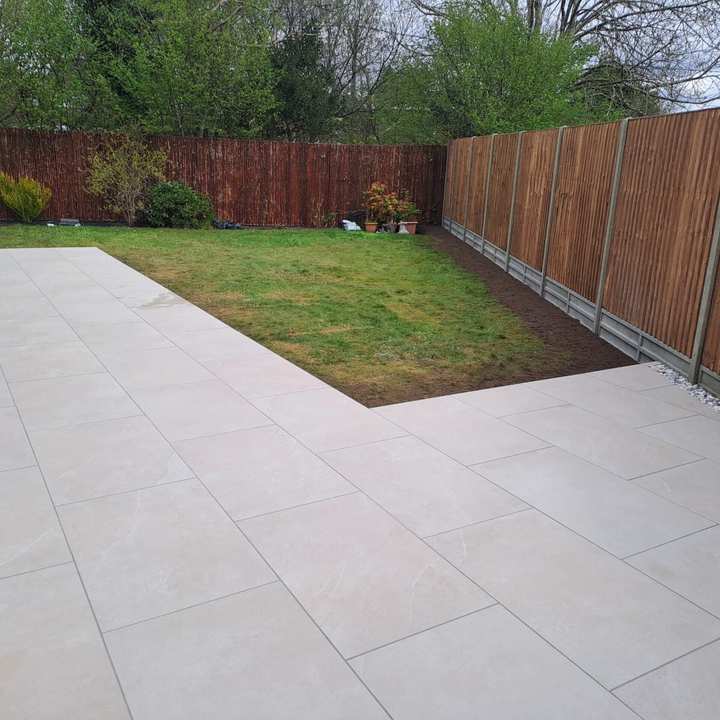
Vertical-board fencing on concrete posts 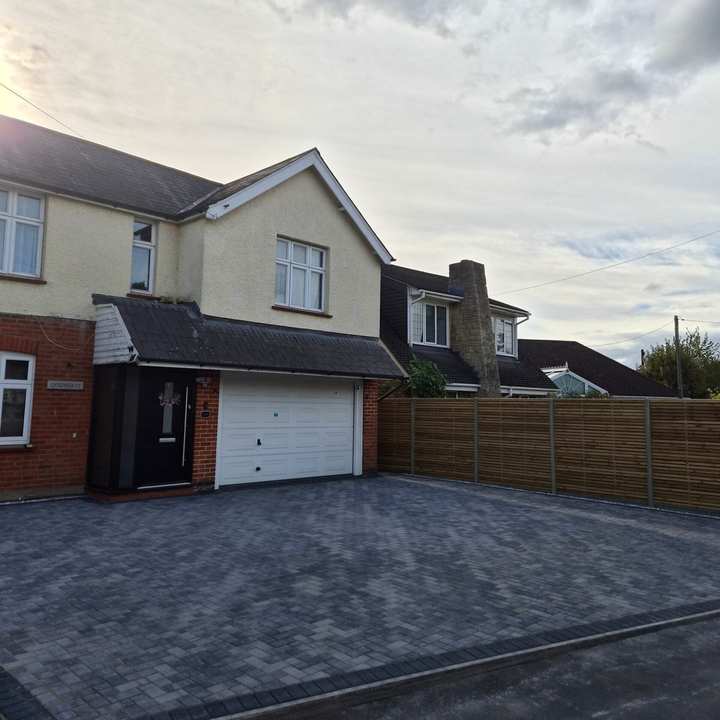
Horizontal-board fencing beside a new driveway 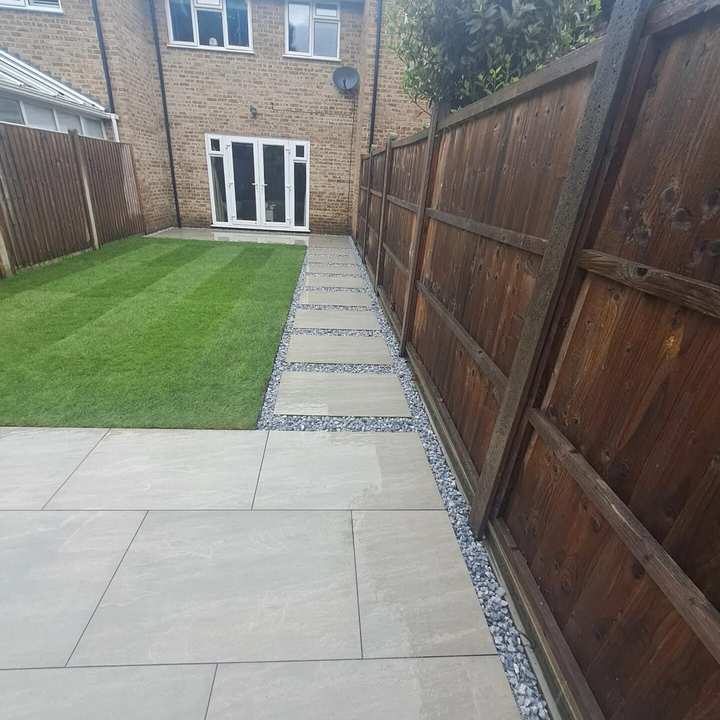
Fencing with a new lawn and path 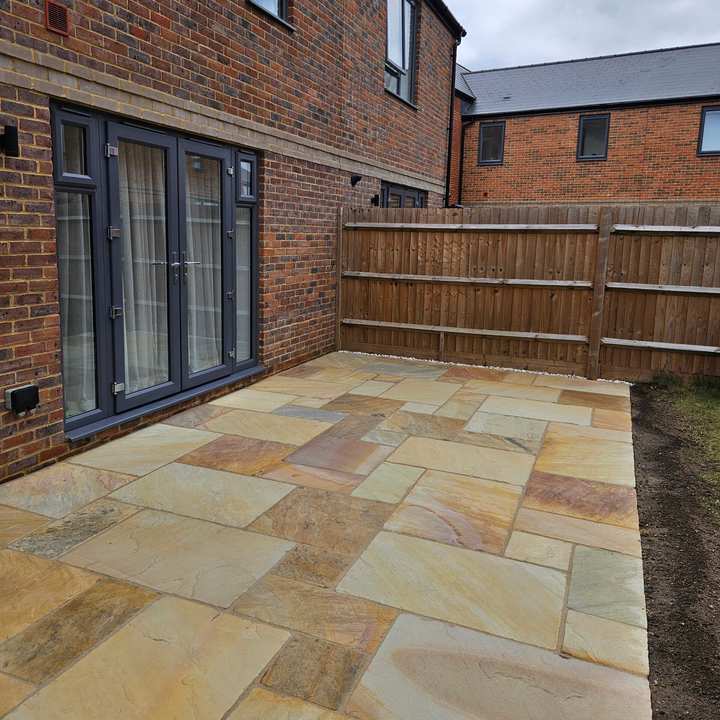
New boundary fencing around a patio 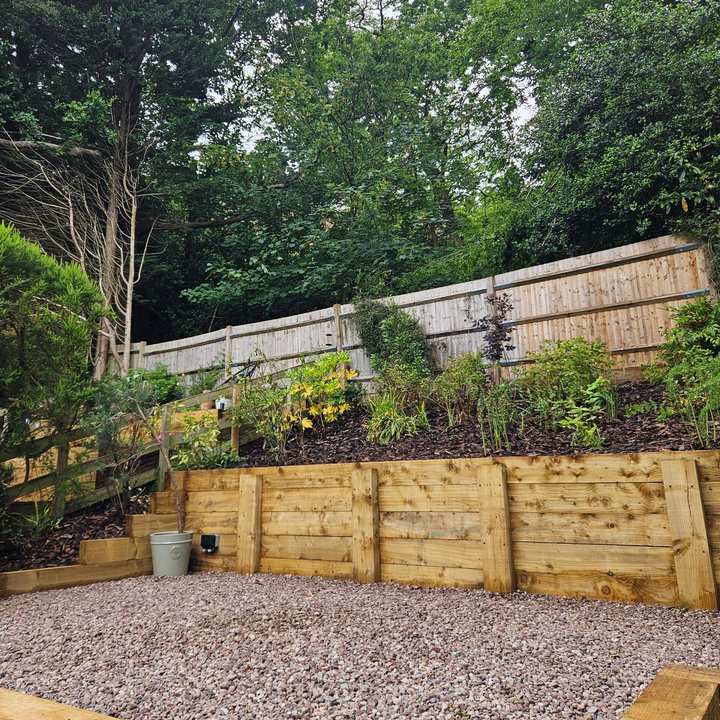
Fencing above sleeper retaining walls 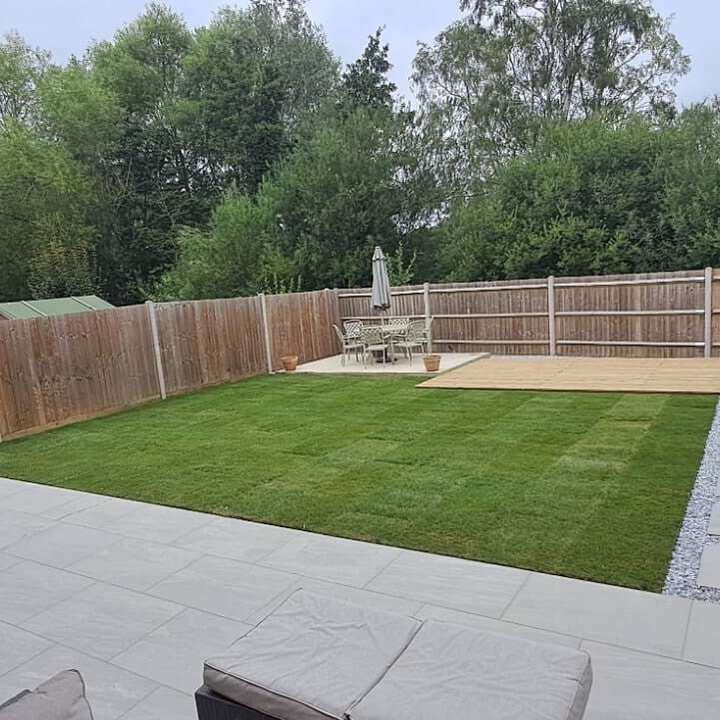
Fencing as part of a full garden makeover
Thinking about fencing?Tell us a little about your space and what you have in mind, or give Dan or Adam a call.
Planning advice
Planning a new fence: what to consider
- Who owns the boundary
- Check your title plan or deeds before replacing a boundary fence. Ownership is not always obvious, and it is worth agreeing plans with your neighbour before work starts.
- Height limits
- Under permitted development rules, fences, walls and gates can be up to 2 metres high, or 1 metre next to a road used by vehicles, without planning permission. Listed buildings and conservation areas may need consent.
- Posts
- Concrete posts do not rot and let panels or boards be replaced individually. Timber posts look more natural and last longer when they are not standing in wet ground.
- Gravel boards
- A gravel board along the bottom keeps fence timber off the soil, which is where rot usually starts.
- Wind and exposure
- Solid fences catch the wind. On exposed sites, posts need deep, solid footings, and designs with gaps between the boards let some of the wind through.
- Access and neighbours
- Fencing work often needs access from both sides of the boundary. Agreeing access and timing with your neighbours in advance makes the job easier for everyone.
FAQs
Fencing: common questions
Do I need planning permission for a new fence?
Not usually, if it is no more than 2 metres high, or 1 metre next to a road used by vehicles. Higher fences, and fences at listed buildings or in some conservation areas, may need permission.
Who is responsible for a boundary fence?
There is no automatic rule about which side you own. Check your title plan and deeds, which may show ownership with T marks, and talk to your neighbour before replacing a shared boundary.
Concrete or timber posts?
Concrete posts do not rot and make it easy to replace a single panel later. Timber posts look softer and more natural. Both work well when they are set in solid footings.
Can a fence be repaired rather than replaced?
Often, yes. If the posts are sound, damaged boards or panels can usually be repaired or replaced without renewing the whole run.

Start your project
Tell us about your outdoor space
Call Dan or Adam for a chat about what you have in mind, or send us a few details and we’ll get back to you.