
Services
Driveways across Surrey, Hampshire & South West London
A driveway is the first thing visitors see, and it takes daily wear from vehicles, so the groundwork underneath matters as much as the finish on top. Every detail, from pattern to colour and edging, is considered so the drive looks right with the house.
We install block paving, permeable block paving, gravel and resin driveways, from new drives and extensions to full replacements, often alongside new fencing, paths or a patio. For more detail on two of those surfaces, see our guides to gravel driveways and resin driveways.
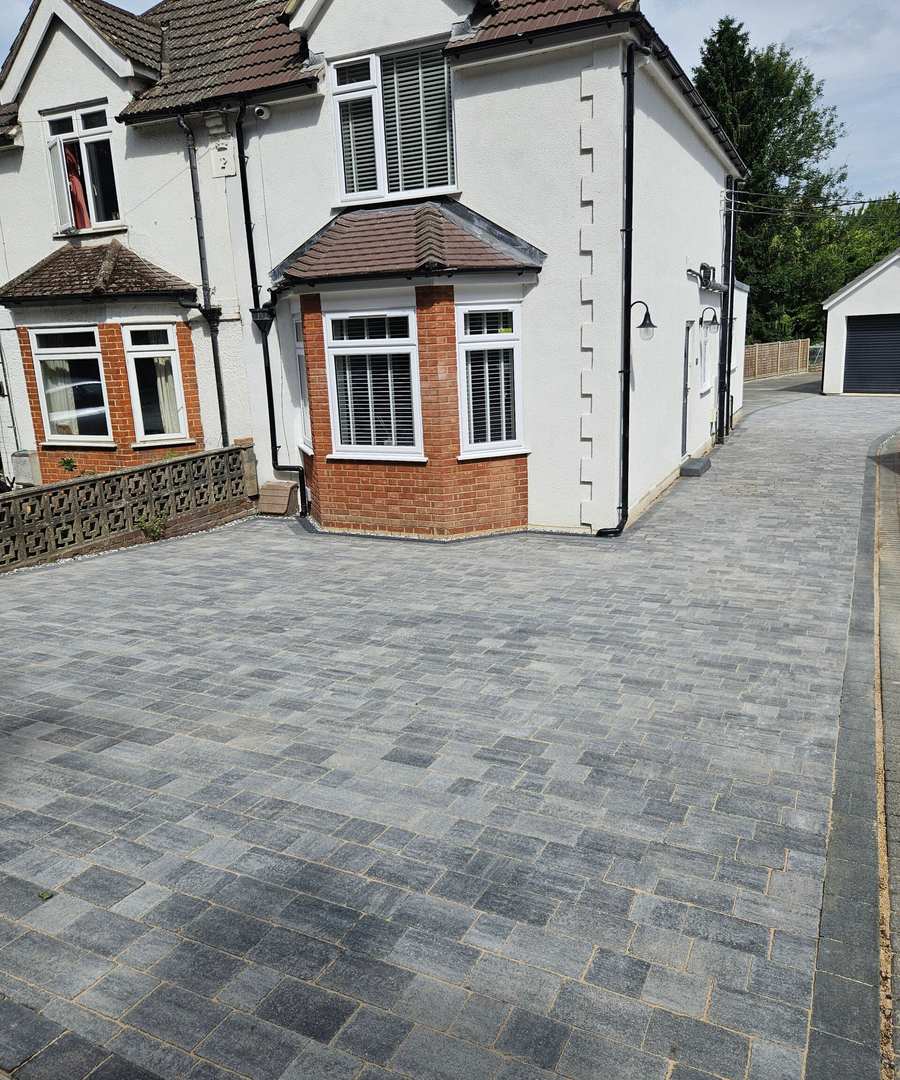
What we do
Our driveways work
- New driveways and full replacements of old or worn drives
- Block-paved driveways with contrasting borders and crisp edging
- Permeable block paving
- Gravel driveways
- Resin driveways
- Driveway extensions to make room for another car
- Driveways combined with new fencing, paths and patios
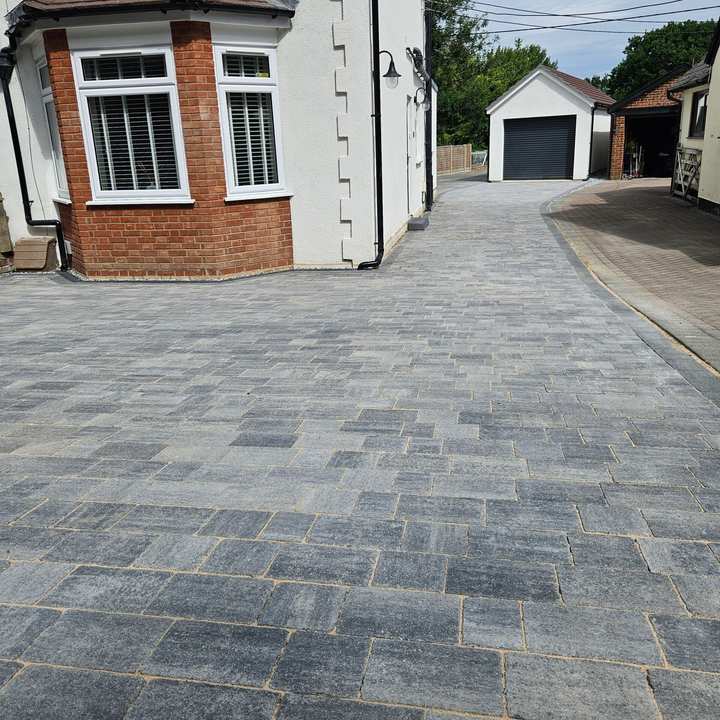
Block paving running to the garage 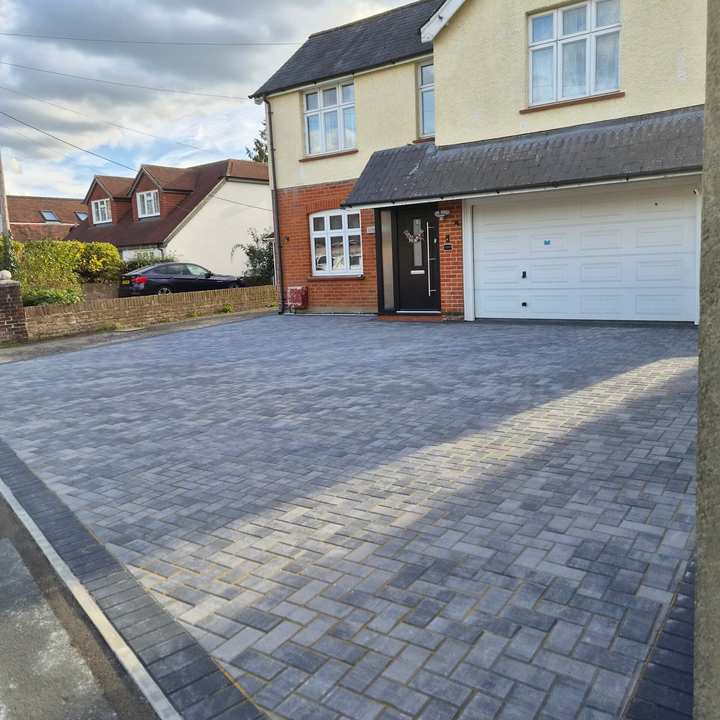
Block-paved driveway with contrasting border 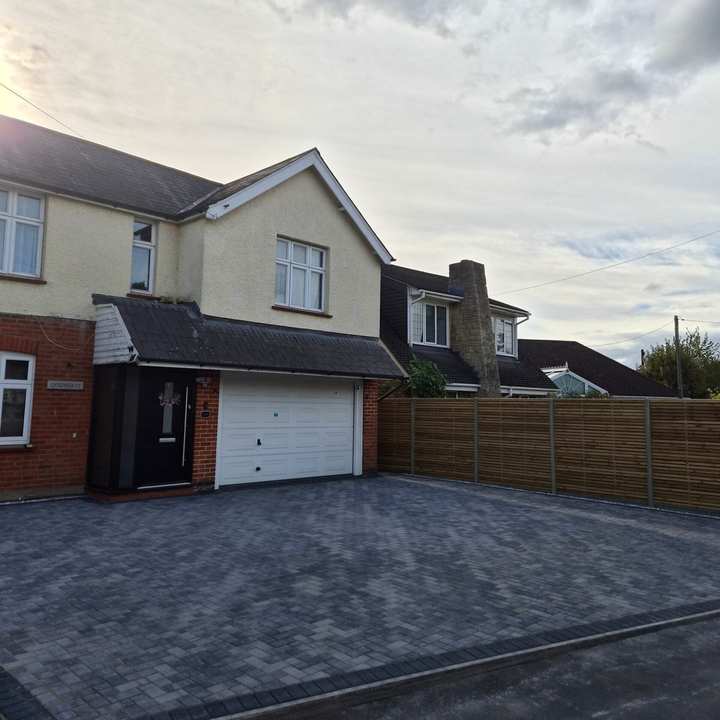
New driveway and fencing
Driveway surfaces we install
All of these are available. Which suits you depends on the ground, how the drive will drain, the style of the house and how much upkeep you want, and we will talk it through with you on site.
Block paving
Hard-wearing and repairable, with a wide choice of colours, borders and laying patterns. Rainwater is directed to a lawn, border or drainage within the property.
Permeable block paving
The look of block paving, with wider joints that let rain pass into an open sub-base and soak into the ground. It works best where the ground drains reasonably well, and we will advise on the sub-base and drainage your site needs.
Gravel
A natural look that drains freely on a permeable base, laid over a firm sub-base with edging to hold the stone in place.
Resin
A smooth, seamless finish of stone held in resin. Resin-bound and resin-bonded are different systems, with different finishes and drainage.
Thinking about driveways?Tell us a little about your space and what you have in mind, or give Dan or Adam a call.
Planning advice
Planning a new driveway: what to consider
- Front gardens and planning permission
- In England, a new or replacement driveway in a front garden does not normally need planning permission if it uses a permeable surface, or if rainwater runs onto a lawn or border within the property. Covering more than 5 square metres with an impermeable surface that drains towards the road does need permission. Flats, listed buildings and homes where permitted development rights have been removed follow different rules.Sources: GOV.UK: permeable surfacing of front gardens (opens in a new tab), Planning Portal: paving your front garden (opens in a new tab)
- Permeable paving and the alternatives
- Permeable block paving lets rain soak through wider joints into a deep, open sub-base and then into the ground. It works best where the ground drains reasonably well and the joints are kept clear of silt and weeds. On heavy clay, common in parts of north Surrey and South West London, it may need a drain or overflow as well. Gravel, a resin-bound surface on a porous base, or conventional paving that drains to a lawn, border or soakaway can meet the same front-garden rules. The right choice depends on the ground, the size of the drive and how much upkeep you want.Source: GOV.UK: permeable surfacing of front gardens (opens in a new tab)
- Dropped kerbs
- A new or wider vehicle crossing over the pavement needs approval from the highway authority (the county council in Surrey and Hampshire, or the borough council in London), and it must be built to its specification.Source: GOV.UK: apply for a dropped kerb (opens in a new tab)
- A sub-base built for vehicles
- Driveways carry far heavier loads than patios, so they need a deeper, well-compacted sub-base. Shortcuts here show up later as ruts and sunken blocks.
- Levels and drainage
- The drive should fall away from the house and garage and must not shed water onto the road or a neighbour's property. A channel drain may be needed across the entrance or in front of a garage.
- Manholes and services
- Existing inspection chambers have to stay accessible. Recessed covers let them sit flush with the paving so they almost disappear.
FAQs
Driveways: common questions
Do I need planning permission for a new driveway?
Not usually, if the surface is permeable or the water drains onto a lawn or border within your property. Using an impermeable surface over 5 square metres of a front garden without that drainage needs planning permission.
Which driveway surface is best?
There is no single best surface. Block paving is durable and easy to repair, permeable block paving gives the same look while letting rain soak away, gravel is natural-looking and drains freely, and resin gives a smooth, seamless finish. The ground, the slope, the drainage and the look you want all affect the choice.
Do you install permeable block paving?
Yes. It can be a good choice where the ground drains well. On some sites, such as heavy clay, we may suggest an alternative that meets the same planning rules, and we will explain why.
Do I need permission for a dropped kerb?
Yes. A new or widened vehicle crossing over the pavement needs approval from the highway authority: the county council in Surrey and Hampshire, or the borough council in London.
Can you extend or replace my existing driveway?
Yes. We extend existing driveways and replace old or worn ones, as well as laying new drives.
How do I keep block paving looking good?
Sweep regularly, deal with weeds in the joints early and top up the jointing sand when it washes out. Pressure washing can strip sand from the joints, so re-sand afterwards if you use one.

Start your project
Tell us about your outdoor space
Call Dan or Adam for a chat about what you have in mind, or send us a few details and we’ll get back to you.